Season: Spring
Theme: The Food Chain and Early Humans
Ages: Lower Elementary through Adult
Purpose of the Lesson
In lesson 3, we learned about soil, seeds, and water. In this lesson, we are talking about the food chain and humanity’s place within it. We will learn how energy moves up the food chain, predator and prey balance, and how all of this contributes to a healthy ecosystem. We will also introduce how early humans lived as hunter-gatherers and then adapted to develop agriculture.
Disclaimer: This blog is for educational purposes only; I’m not a professional educator, just a nerd sharing what I’ve learned.
Learning Objectives & Outcomes
By the end of this lesson, learners will be able to:
- Explain how energy moves through the food chain from plants to herbivores and predators
- Identify the roles of plants, insects, birds, and animals within ecosystems
- Understand how predator and prey relationships help maintain ecological balance
- Explain the importance of breeding and mating cycles in maintaining animal populations
- Understand how early humans lived as hunter-gatherers and adapted to their environments
- Describe how domestication and agriculture led to the shift from nomadic lifestyles to settled communities
Core Lesson: Food Chains and Ecosystems
In the previous lesson, we explored how soil, water, and seeds work together to support plant growth. Plants form the foundation of nearly every ecosystem on Earth. Once plants grow in spring, they provide food and habitat for insects, birds, animals, and ultimately humans. This interconnected system is known as the food chain.
Understanding food chains helps us see how energy moves through nature and how living things depend on one another for survival.

The Food Chain: How Energy Moves Through Nature
A food chain describes how energy moves from one organism to another. The food chain begins with plants.
Plants are called producers because they create their own food through photosynthesis using sunlight, water, and carbon dioxide.
Animals that eat plants are called herbivores. Examples include:
- Deer
- Rabbits
- Elk
- Grasshoppers
- Many insects
- Most fish
Animals that eat other animals are called predators or carnivores. Examples include:
- wolves
- hawks
- foxes
- lions
Some animals are omnivores, meaning they eat both plants and animals. Humans can digest plants and animals and thus are considered omnivores.
A simple food chain might look like this:
- Grass to rabbit to fox
Energy moves from the sun to plants, then to herbivores, and finally to predators. And, as we learned in lesson three, the bodies of animals decompose into the soil and provide nutrients for plants. Thus, the food chain is a complete cycle, all fostered by the sun.
Ecosystems: Plants, Insects, Birds, and Animals
The food chains exist within larger systems called ecosystems. An ecosystem includes all living organisms in an area and the environment with which they interact.
A healthy ecosystem contains many types of organisms, including:
- plants
- Insects
- Reptiles and amphibians
- Fish
- Birds
- Mammals
- Microorganisms
Each creature plays an important role.
Plants provide food and oxygen. Insects pollinate plants and help break down organic material. Birds control insect populations and spread seeds. Larger animals shape landscapes through grazing and movement.
These relationships create a balanced system where many species depend on one another.

Predator and Prey Balance
One of the most important relationships in ecosystems is the balance between predators and prey.
Prey animals provide food for predators, while predators help control prey populations. This balance prevents any single species from becoming over populated which could damage the ecosystem.
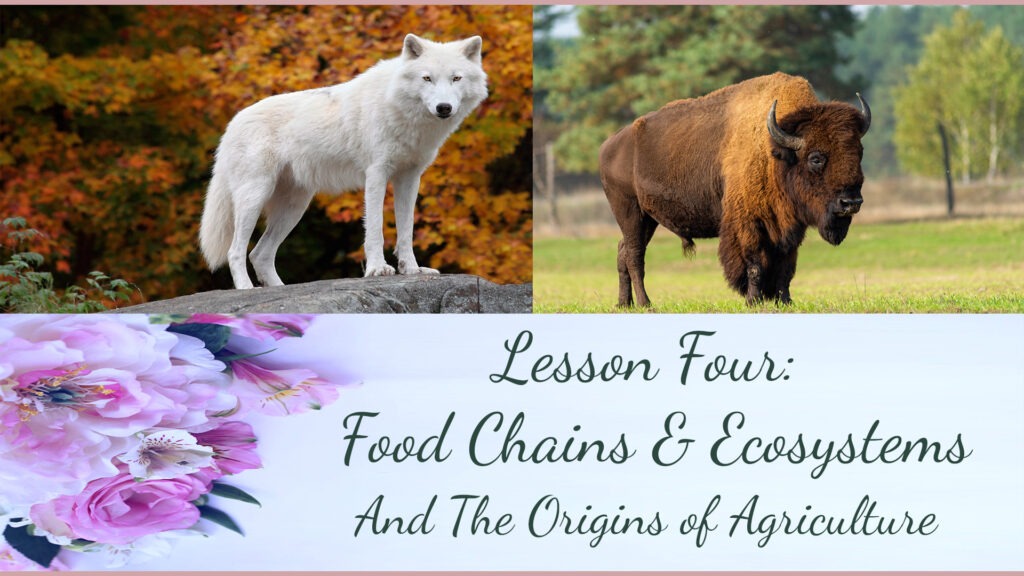
If deer populations, for example, grow too large, they may overgraze plants and damage the ecosystem. Predators such as wolves help keep deer populations balanced.
In healthy ecosystems, predator and prey populations naturally rise and fall in cycles.
This balance helps maintain stable ecosystems where many species can survive.

Animal Migration and Herd Behavior
Many animals move across vast distances throughout the year in search of food, water, or breeding grounds. This movement is called migration.
Migration helps animals survive seasonal changes.
Examples of migrating animals include:
- birds traveling between northern and southern regions
- whales moving between feeding and breeding waters
- caribou and wildebeest traveling across large landscapes
Some animals also travel in herds or groups. Herd behavior offers several advantages:
- protection from predators
- easier location of food and water
- stronger social bonds within groups
Herds are common among grazing animals such as bison, antelope, zebras, and deer.
Breeding and Mating Cycles
Many animals follow seasonal breeding cycles that help ensure their young are born at the best time of year. These species give birth in spring when food becomes more abundant. This increases the chances that young animals will survive.
Breeding season behaviors might include:
- courtship displays
- territorial defense
- vocal calls or songs
These behaviors help animals attract the best mates and establish breeding territories. This ensures only the strongest animals pass on their genes to the next generation. The evolutionary processes that has sustained life through millions of years depends on this selective behavior.
Seasonal breeding cycles are closely connected to environmental conditions such as temperature, daylight, and food availability.
Early Humans as Hunter-Gatherers
Before agriculture existed, early humans lived as hunter-gatherers. This means they depended completely on the environment and were part of the ecosystem. They gathered fruits, nuts, roots, and edible plants. And they hunted animals for meat, hides, bones, and other materials for tools and clothing.
Unlike many animals that hunted and were often hunted, Humans lack things like poisonous quills, great speed, or claws. But they make up for this by having big brains and greater intelligence.
Because food resources changed with the seasons, hunter-gatherer groups often moved from place to place. This way of life is called a nomadic lifestyle.
Early humans surveyed animal migration patterns and seasonal plant growth to know when and where food would be available.
Tools and Human Adaptation
Humans developed tools to help them survive in different environments.
Early tools included:
- stone blades for cutting
- spears for hunting
- scrapers for preparing hides
- digging tools for gathering roots
These tools allowed humans to hunt animals more efficiently and process food more easily. It also helped them to adapt to different climates by creating clothing, shelters, and fire.
These adaptations allowed early humans to live in environments ranging from deserts to forests to cold northern regions.

Domestication and the Beginning of Agriculture
Over time, humans learned how to domesticate the plants and animals around them. Domestication means raising plants or animals under human care for food or other resources.
Early farmers began planting seeds from useful plants such as grains, legumes, and vegetables. Instead of searching for wild plants, they could grow food in one location.
Humans also domesticated animals such as:
- sheep
- goats
- cattle
- chickens
Domesticated animals provided a reliable source of meat, milk, wool, and labor. This led to agriculture and the beginning of civilizations.
The Shift from Nomadic to Civilization
The development of agriculture led to one of the most important changes in human history: the shift from a nomadic lifestyle to civilizations. A civilization is defined as a complex, organized human society with a high level of cultural, social, and technological development.
When people could grow crops and raise animals in one place, they no longer needed to move constantly in search of food.
Connecting Ecosystems and Human Life
Food chains and ecosystems show how closely connected all life on Earth is.
Plants capture energy from the sun. Animals depend on plants or other animals for food. Humans rely on both plants and animals for survival.
Understanding these relationships helps us appreciate how ecosystems function and why maintaining ecological balance is essential for life on Earth.
From the movement of migrating herds to the development of agriculture, the story of ecosystems is also the story of human survival and adaptation.
Cross-disciplinary Connections
This lesson covers several areas of study. Food chains, animal behavior, and early human societies are all lessons in history, geography, biology, and others.
Biology and Ecology
The study of animals and how they behave is a lesson in biology and ecology. How animals migrate, breed, and the balance of prey and predator are systems that have worked in the animal kingdom for millions of years.
Geography
The study of food chains is important to geography because animal migrations vary across the world. Climate, terrain, water sources, and seasons influence where animals live.
History and Anthropology
This lesson introduces how early humans started out as hunter-gatherers and later developed the ability to domesticate animals, which led to agriculture and early civilizations.
Agriculture and Food Systems
The domestication of plants and animals led to agriculture and was the start of how humans adapted to and changed the environment around them.

Activities And Review Questions by Age
Lower Elementary (K–3)
Do:
- Simple food chain drawing: Draw a basic food chain, choose a plant, a prey animal, and a predator animal.
- Animal movement game: Pretend to be different animals moving in herds or migrating. Discuss why animals travel together or move to different places during different seasons.
- Sorting animals: Use pictures of animals and sort them into groups such as plant eaters (herbivores), meat eaters (carnivores), or animals that eat both.
Review:
- What is a food chain?
- What do plant-eating animals eat?
- Why do some animals move in groups or herds?
Upper Elementary
Do:
- Build a food chain chart: Create a chart showing how energy moves from plants to herbivores and then to predators.
- Migration map: Choose a migrating animal, such as birds or whales and draw a map showing where they travel during the year.
- Hunter-gatherer activity: Imagine living as a hunter-gatherer. Make a list of foods you might gather and animals you might hunt in your region.
Review:
- Why are plants considered producers in a food chain?
- How do predators help maintain balance in ecosystems?
- Why did early humans move from place to place when they were hunter-gatherers?
Teen / High School
Do:
- Food web diagram: Create a food web showing multiple animals connected within an ecosystem rather than a single food chain.
- Animal behavior research: Research a species that migrates or lives in herds and explain how this behavior helps the species survive.
- Agriculture timeline: Create a timeline showing the transition from hunter-gatherer societies to early farming communities.
Review:
- How does energy move through a food chain?
- What happens to an ecosystem if predator populations disappear?
- How did the development of agriculture change human societies?
Adult Learners
Do:
- Local ecosystem study: Identify a local ecosystem and list several plants, herbivores, and predators that form part of the food chain.
- Human history reflection: Research one early agricultural civilization and explain how farming changed the way people lived.
- Food system exploration: Investigate how modern agriculture still depends on natural ecosystems such as soil health, pollinators, and water systems.
Review:
- How are ecosystems connected through food chains and food webs?
- Why were migration and seasonal hunting important to early human survival?
- What factors allowed humans to shift from nomadic lifestyles to settled agricultural societies?
Conclusion
In this lesson, we explored how animals behave. We learned about food chains from plant to prey to predator and how nature strikes a delicate balance between it all. And, we learned about healthy ecosystems.
We also learned about how early humans used their bigger brains to domesticate the plants and animals in their environment and how this allowed them to develop from hunter-gatherer societies to agricultural civilizations.
In the next lesson, we are going to learn about biomes. We’ve climbed the ladder from how the sun sends light and heat to the earth, and how life at each stage uses that energy from organisms in the soil, to plants, to animals and finally to early humans. Next, we are going to talk about biomes and the differences between them.
References